A glass garden table rarely deteriorates due to the glass itself. Tempered glass, which has become the standard for outdoor furniture, withstands shocks and temperature variations much better than one might think. The problem lies in what is placed on, around, and over it for protection.
Poorly ventilated covers, tablecloths that trap moisture, and objects left permanently on the surface: protection often becomes the direct cause of damage. What parameters should be measured to choose a method that preserves the tabletop without damaging it?
When the protective cover damages the garden glass
Most guides recommend covering your glass table whenever it is not in use. The reflex seems logical, but a poorly chosen or improperly placed cover creates a microclimate under its surface that accelerates the deterioration of the tabletop.
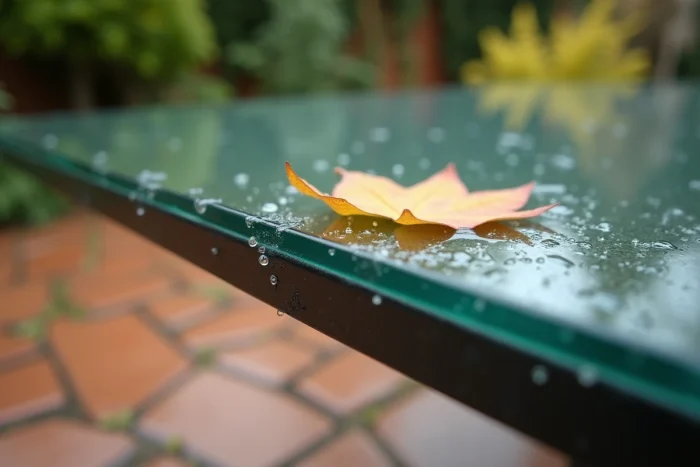
The first mechanism at play is condensation trapped under the cover. When the temperature drops at night and then rises during the day, moisture condenses on the glass. If the cover does not allow this moisture to escape, water stagnates, deposits minerals, and leaves difficult-to-remove white marks. The joints between the tabletop and the aluminum or galvanized steel structure are particularly vulnerable: stagnant water promotes the oxidation of the metal support.
Wind is a second factor of degradation. An unsecured cover rubs against the glass surface with every gust. Dust or sand particles trapped between the fabric and the glass act as a fine abrasive. Within a few months, micro-scratches appear on the tabletop, visible in low-angle light.
To ensure effective protection for glass tables without generating these side effects, two criteria are crucial: the breathability of the cover material and the fastening system that prevents any friction.
Breathability and fastening: comparison of types of protection for glass tables
Not all protections are equal when it comes to the risks of condensation and friction. The table below compares common solutions according to the parameters that truly matter for the durability of the tabletop.
| Type of protection | Breathability | Friction risk | UV protection | Estimated durability |
|---|---|---|---|---|
| Standard polyester cover | Low | High without fastening | Variable | Medium |
| Cover with side vents | Good | Reduced if straps are integrated | Variable | Good |
| Transparent waxed cloth laid down | None | Low (adhesion) | Low | Short |
| Adhesive laminated film | None | None | Low | Short |
| Thick textile tablecloth | Good | Low | None | Medium |
Recent covers designed for outdoor furniture increasingly incorporate ventilation openings to expel moisture. This is the criterion to check as a priority. A completely waterproof cover protects against rain but turns the covered space into a condensation chamber as soon as the sun returns.
On the other hand, laminated films and waxed cloths, often recommended for daily use, are not suitable for prolonged outdoor protection. Their total impermeability traps residual moisture and accelerates the appearance of marks on the glass.
Galvanized steel structure and glass tabletop: protect the whole, not just the surface
The durability of a glass garden table depends as much on the support as on the tabletop. Outdoor furniture manufacturers now use structures made of galvanized steel or corrosion-resistant treated aluminum to withstand the elements. Protecting only the glass while neglecting the base is like treating the symptom without addressing the cause.
The moisture that accumulates at the contact points between the tabletop and the metal structure causes two simultaneous problems. On one hand, rust develops on the fasteners if they are not made of stainless or galvanized steel. On the other hand, oxide deposits migrate to the glass and create orange stains at the joints.
Maintenance of the metal base
- Rinse the structure with clear water after each prolonged rain to remove acidic or calcareous residues before they dry
- Check the fastening points between the tabletop and the structure at least twice a year: a rusted bolt weakens the assembly and leaves marks on the glass
- Apply a protective product suitable for the material (aluminum or steel) before the wet season, avoiding any direct contact of the product with the glass surface
The initial choice of structure material determines the maintenance effort. Aluminum does not rust and requires little treatment. Galvanized steel holds up well but needs monitoring of areas where the coating may chip.
UV protection and placed objects: two factors in the aging of outdoor glass
Classic maintenance advice focuses on cleaning and winterizing. However, two degradation factors remain underestimated over time.
Ultraviolet radiation does not directly attack tempered glass, but it degrades the seals, paints, and decorative elements surrounding the tabletop. A cover with UV protection safeguards the entire table, not just against rain. Recent protective products for outdoor furniture increasingly incorporate this UV filter, a criterion to check on the label before purchase.
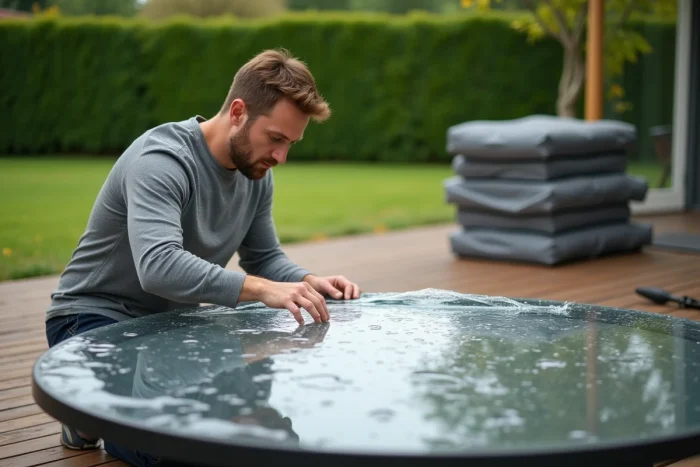
The second factor concerns objects left permanently on the glass. Proloisirs, a garden furniture manufacturer, explicitly states to not place objects permanently on a tempered glass tabletop: they leave permanent marks and become a source of deterioration. Flower pots, decorative trays, candles: any static object creates a zone of stagnant moisture under its base.
Concrete actions to limit aging
- Regularly move objects placed on the tabletop to avoid permanent moisture marks
- Never place a hot or cold object on glass exposed to the sun, as thermal shock weakens the structure of tempered glass over time
- Prefer felt or cork coasters over ceramic or metal, which can scratch the surface
The lasting protection of a glass garden table relies on a balance between covering and ventilation, between maintaining the tabletop and caring for the structure. A breathable cover properly secured, a monitored metal base, and the absence of static objects on the glass surface are enough to extend the lifespan of the whole over several seasons without heavy intervention.