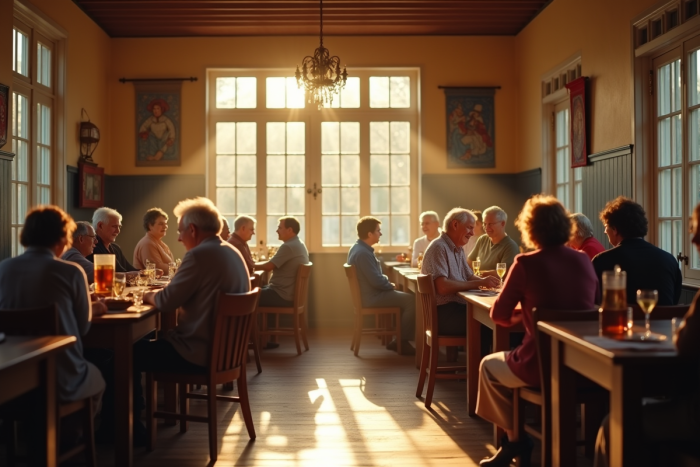
A badge that has crossed decades, embroidered with faded threads, sometimes knows more about the soul of a city than any bronze statue. Behind the creaking door of a historic club, it is not just memories that are exchanged, but bursts of life: laughter, rivalries, and silent alliances. From these walls steeped in stories, an invisible web is born, connecting residents far beyond generations.
When a club temporarily closes its shutters for some renovations, an entire neighborhood suddenly loses its compass. For here, it is neither official speeches nor ribbon-cutting ceremonies that shape the beating heart of the city, but rather the tension of a game of belote or the excitement of a long-planned celebration. These moments, woven away from the spotlight, outline the true contours of local life.
Historical clubs: invisible pillars of local cohesion
Over the centuries, France has seen the emergence of historical clubs that, through their roots and loyalty, have become the true architects of local life. Take the Club des Jacobins, based in Paris but radiating into the smallest provinces thanks to a dense network of affiliated societies. The Journal des amis de la Constitution, launched by Choderlos de Laclos, allowed these ideas to circulate, weaving a national mesh where debates and positions took root in every city. The Declaration of the Rights of Man and of the Citizen would never have become this symbol without these discussion places, where voices like those of Olympe de Gouges or Pauline Léon – figures of the Society of Revolutionary Republican Women – raised the banner of change high.
With the 19th century, these historical clubs reinvent themselves. The emergence of sporting and cultural associations continues to infuse this collective dynamic. Like the AJA 1905, entire cities vibrate around a club, transmitting values and building an identity. This pattern transcends eras: from the learned clubs of the 18th century to the sports clubs of the 20th, transmission and social ties remain the driving force.
- Public debates and exchanges of ideas in learned societies
- Solidarity and educational initiatives led by local associations
- Animation of cultural, sporting, and civic life
Through their history, historical clubs have become the living memory of society and its citizens. They do not belong to the archives: they still inspire the desire to come together, to fight against isolation, to create community. When the French federation or other national bodies gather these initiatives, they remind us that these clubs remain engines of freedom, emancipation, and dialogue, not dusty relics.
How do these places shape civic engagement and daily life?
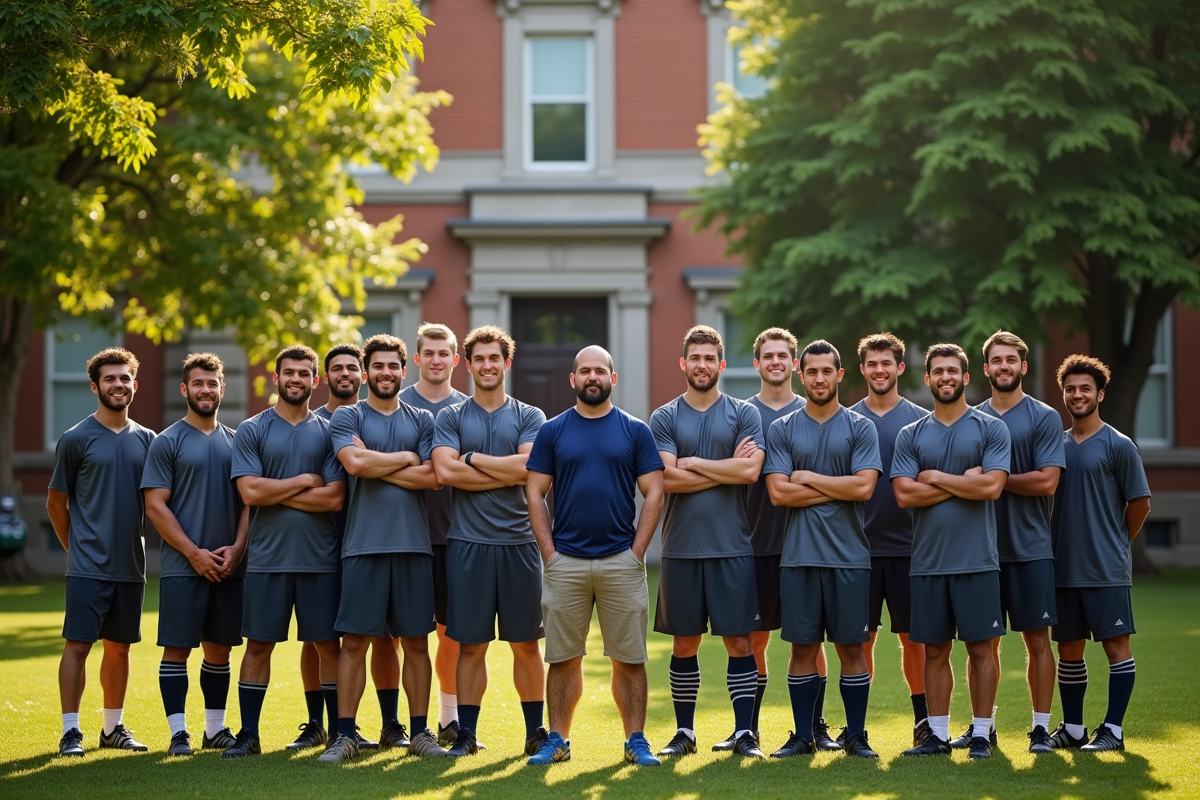
At the heart of the French social fabric, historical clubs play the role of true hubs of citizen mobilization. Take the example of the football club in Argagnon: here, the field is just a pretext. It is the social and educational actions carried out around the round ball that unite the population. The transmission of humanist values, openness to all, the ability to create connections between ages: everything converges to foster a vibrant, supportive community that takes pride in itself.
These structures sometimes draw inspiration from the legacy of political clubs of the 18th century, but they know how to evolve. Rotary and Lions Clubs, for example, were born from this tradition of mutual aid and local action; they are now transforming this commitment into large-scale actions: campaigns against blindness, support for children in difficulty, fundraising for the Téléthon… Here, solidarity is not displayed; it is practiced, daily and without fanfare.
- Transmission of the spirit of citizenship through sport or culture
- Support for the most vulnerable: solidarity meals, homework assistance, access to sports for all
- Establishment of intergenerational networks to break solitude
The vigor of local clubs is also a reflection of our times: they assert themselves as trusted partners for local authorities, adjusting their actions to the real needs of the population. Their strength? This ability to bring people together around projects, to provoke encounters, to facilitate dialogue between generations, and to open windows to the world. Historical clubs, far from fading away, remain powerful triggers for social engagement and local unity.
Tomorrow, what will remain in memories? Perhaps the scent of a club room, the voices resonating during a meeting, or the thrill of a goal scored under the cheers of an entire neighborhood. In short, the certainty that collective history is still being written, here and now, in these places where we come together to dream together.