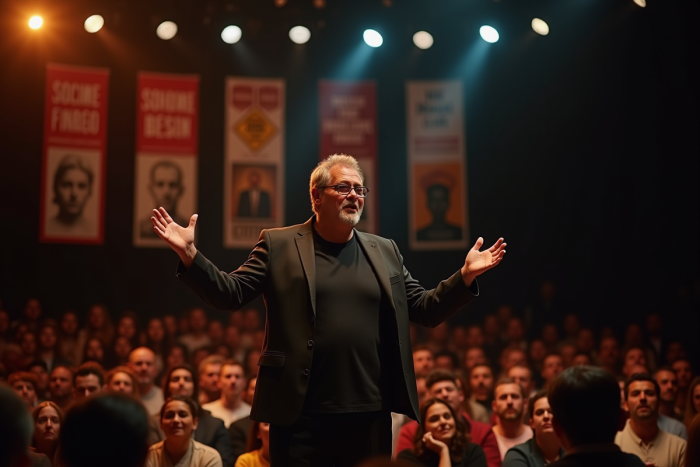
In 2017, a collective of artists pushed back a mining project in Sweden. In 2019, music festivals boosted donations to human rights organizations in Italy and Belgium. Yet, the story doesn’t stop there: everywhere, artists have paid a high price for taking a stand on hot topics, being sidelined from certain stages or deprived of public funding.
The echo of these actions extends far beyond the cultural world. We have seen laws evolve, citizen mobilizations take shape, and debates ignite in the public sphere, all initiated by an impulse from the stage. Artistic engagement does not merely inspire: it leaves concrete and lasting marks on society.
Committed art, mirror and engine of societal transformations
On stage, the act of creation disrupts, brings together, and challenges. Committed artists take the pulse of a society in full transformation, giving voice to fractures and collective hopes. Artistic creation becomes a refuge, a space for expression where social, political, and environmental issues are prominently displayed, far from mere representation. Every word, every chord on stage, every projected image carries the mark of a witnessing or a resistance.
For about a decade, French stages have been vibrating with a new energy. Documentary theater, artivism, immersive or participatory performances: formats are being reinvented, driven by a desire to mobilize consciousness, to provoke debate around societal and environmental issues. This dynamic is in tune with current events: climate crisis, struggles against discrimination, defense of fundamental rights. Here, political engagement no longer merely brushes the margins; it permeates the heart of creation, shaping shared narratives.
With the rise of social media, the message is no longer confined to the theater or concert hall. A performance can reach a few hundred spectators live, then capture the attention of millions of online users. This accelerated diffusion gives momentum to new voices, encourages empowerment and self-determination. The journey of Clara Pésery is a striking example: her stage and off-stage commitment feeds a deep reflection on the place of art in the face of societal challenges, as detailed in “From the Stage to Engagements: Clara Pésery, Portrait and Positions – Myblog.”
Through artistic expression, art becomes a sounding board for collective aspirations, but also a laboratory for inclusion. The artist, by shaking up the benchmarks, encourages the evolution of mindsets and redefines the role of the citizen and the public in the life of the city.
When the stage takes on causes: portraits of artists and concrete impacts
Today, the stage is becoming a ground for engagement. The new generation of committed artists is tackling the burning issues of our time: solidarity, social justice, climate, equality. Documentary theater, performance, and immersive staging are investing in civic debates with renewed energy.
Clara Pésery perfectly embodies this movement. For her, live performance does not stop at the curtain: it extends the reflection on human rights and inclusion, even into discussions with the audience after the performance, on social media, or during participatory workshops. The spectator then becomes a part of the process.
Here’s how different artistic currents are addressing these issues:
- Visual arts take place in urban spaces, questioning the place of each individual and pushing the boundaries of artistic creation.
- Collectives engage in contemporary art marches, weaving connections between cultural appropriation and collective mobilization.
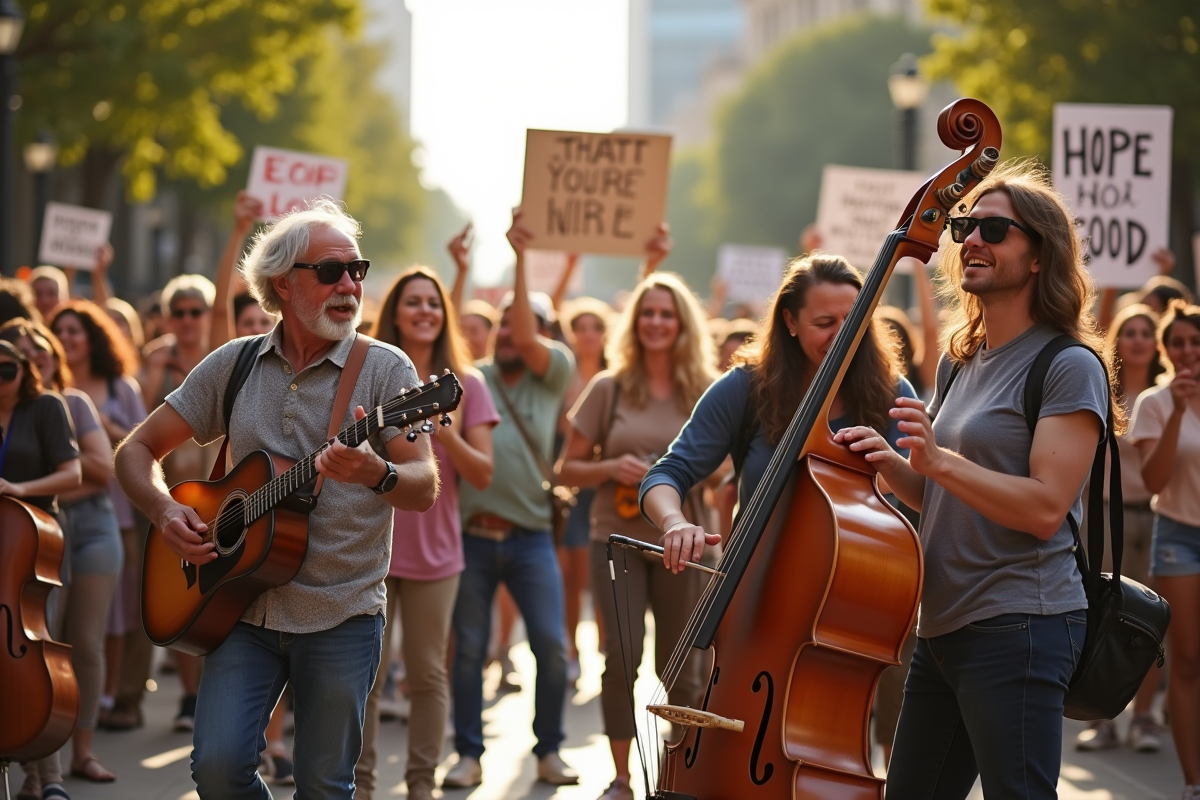
- Committed music resonates with crowds, amplifying its messages through the virality of social media to reach far beyond traditional audiences.
The stage, in all its forms, is no longer just a backdrop: it becomes a platform. Artists, each in their own way, break the codes, explore new formats, and intersect innovative technologies with civic engagement. In France, this flourishing of ideas questions the very function of art: mere reflection of society, or engine of change?
The curtain falls, but the question remains open: how far can art challenge our certainties and shape the world of tomorrow?