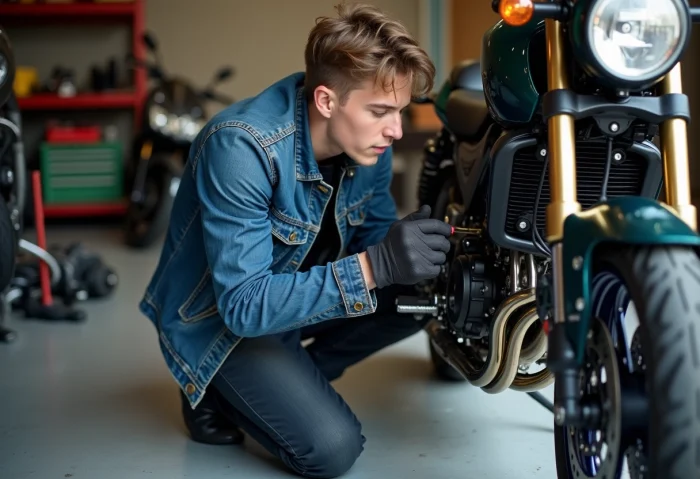
In France, legislation strictly limits the power of 125 cm³ motorcycles, but certain models, like the Yamaha MT 125, generate enthusiasm for superior performance. Despite technical constraints imposed by manufacturers, there are methods to circumvent these restrictions while maintaining engine reliability.
Specific procedures govern each step of the derestriction process, requiring particular attention to maintenance, especially regarding warm-up time. The advancements announced for 2025 promise to influence these practices and open new perspectives for motorcycles in this category.
Maximum speed of Yamaha MT 125 and other 125 models: what you really need to know
The Yamaha MT-125 intrigues with its agile appearance, versatility, but especially by the constraint that limits it right from the factory: French regulations leave no room for improvisation. Here, speed is not left to chance. The 125 cm³ are calibrated not to exceed a well-known ceiling, dictated by the Euro 3 standard and safety imperatives. However, under the fairing, the MT 125’s engine hides a deliberately underutilized technical margin.
The VVA technology (Variable Valve Actuation) equips this model and optimizes gas distribution, but power remains restricted by the electronic control unit, engine mapping, and fuel system. In practical terms, the MT 125 tops out around 110 to 115 km/h, and its acceleration is limited, despite a modern engine architecture. The restriction affects not only top speed: it also impacts responsiveness, limiting the potential of each acceleration.
For those looking to push these limits, the guide to derestricting an MT 125 sheds light on the steps to follow, precautions to take, and legal framework. It’s not just about gaining a few kilometers per hour, but about unleashing part of the machine’s character while respecting the mechanics and onboard electronic systems, including the ABS.
Each model has its own configuration: electronic management, specific mapping, internal restriction. Comparing the Yamaha MT-125 to other 125 cm³ models involves measuring different trade-offs between performance, safety, and legal constraints. Derestriction, if it exists, is never done without conditions and remains subject to legislation, which tolerates no approximation on open roads.
Derestricting your 125 motorcycle safely: practical advice, tips, and points of vigilance
Modifying a Yamaha MT 125 is not something to take lightly. Removing the restriction requires intervention on sensitive areas: electronic control unit (ECU), intake manifolds, exhaust, and sometimes even the air filter. Revising the fuel system often becomes unavoidable to ensure the engine operates healthily once its limitations are removed.
But the law strictly regulates this type of transformation. On the road, derestriction is prohibited unless very specific conditions are met, such as those set out by the Retrofit Decree. Changing the original configuration requires a declaration on the registration document. In the event of an accident, an insurance company may refuse to cover a modified motorcycle without declaration, and the manufacturer’s warranty is voided. The legal risks are not trivial and can have serious consequences.
Before considering this operation, here are several recommendations to keep in mind:
- Consulting an official dealer ensures a controlled and secure intervention without jeopardizing the mechanics.
- Limiting derestriction to closed track use helps avoid penalties and enjoy the power safely.
- Check the compatibility with your license: beyond the legal limit, the A1 or A2 license is no longer sufficient, be aware of the consequences.
Derestricting an MT 125 often involves reprogramming the ECU or replacing certain parts to fully exploit the engine’s potential. At each step, it remains essential to act within the framework of regulations and to adhere to safety rules. Neglecting these points exposes one to disputes or dangerous technical incidents.

Maintenance, engine warm-up, and innovations 2025: riding faster without neglecting your machine
Unlocking the power of a Yamaha MT 125 is not just about chasing speed. This modification requires increased vigilance regarding maintenance and monitoring of components. The engine, transmission, clutch, and brakes endure greater stress. With each prolonged increase in RPM, wear accelerates and safety margins decrease.
The engine warm-up time thus becomes a mandatory step. Straining a cold engine quickly damages internal parts, increases oil consumption, and weakens the timing chain. It is therefore imperative to wait for the temperature to reach its optimal level before any hard acceleration. Monitoring lubrication, checking oil levels, and being attentive to the engine block temperature: these actions prevent many mishaps and extend the lifespan of your machine.
To maintain reliability, several points require heightened attention:
- Frequently check the condition of the brakes, as the extra power requires greater energy dissipation during deceleration.
- Inspect the transmission and chain: tension and lubrication must remain impeccable to avoid any premature weakening.
2025 is already shaping up to be a pivotal year for the Yamaha MT 125. The upcoming generations will incorporate innovations to optimize performance without sacrificing robustness: advanced electronic management, more durable materials, onboard temperature control systems, and component monitoring. Taking care of your motorcycle, anticipating revisions, and investing in maintenance becomes the best way to sustainably enjoy a finally unleashed power. The road stretches ahead, and so do the possibilities: it’s up to each individual to choose how to explore them.