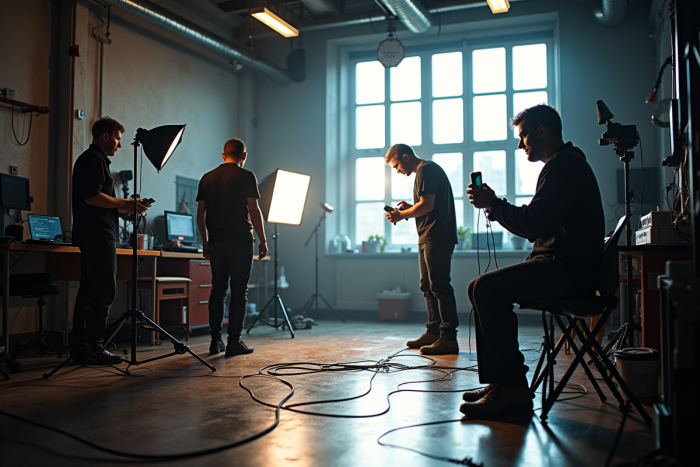
A stunt performer can never double more than two main actors in the same film, according to American union conventions. However, on some low-budget shoots, this rule is circumvented to limit costs, even if it exposes the teams to additional risks.
The coordination of special effects often involves last-minute adjustments, imposed by unpredictable weather or a change in angle required by the director. The entire setup then relies on the responsiveness of technicians whose names will never appear in the credits.
Diving into the behind-the-scenes: who are the truly invisible artisans of cinema?
Far from the red carpets and flashes, a crowd of specialists builds each shot of film in absolute discretion. On a film set, the calm is only apparent: one can sense the tension of the boom operator, frozen to avoid compromising the sound, or the precise gaze of the director of photography, who tirelessly adjusts the light and angle. These shadow professions of cinema orchestrate a score where the slightest mistake comes at a high price. The chief grip checks the stability of a dolly, the production manager anticipates every movement. Everything relies on their precision: if one falters, the magic disappears in an instant.
Behind the authenticity of a film noir or the splendor of a historical epic, there are always these invisible hands. Costume designers, prop masters, production designers: all participate in a silent choreography. Their techniques are exchanged in hushed tones, their advice circulates from workshop to workshop, always on the lookout for the right detail. The art direction imagines a world, the director of photography shapes the light, the stunt coordinator ensures safety, sometimes in emergencies. At times, a personality stands out and leaves a mark: stuntman David Olsen is one of them, a reference for a whole generation of technicians and artists fascinated by this know-how.
In the studios, anecdotes flow from set to set. They speak of the muffled footsteps of a chief electrician on a western set, or the almost obsessive attention of Jean and Pierre, historical figures of the machinery. These women and men, far from the spotlight, patiently weave the memory of cinema. Their discreet imprint shapes works that will endure.
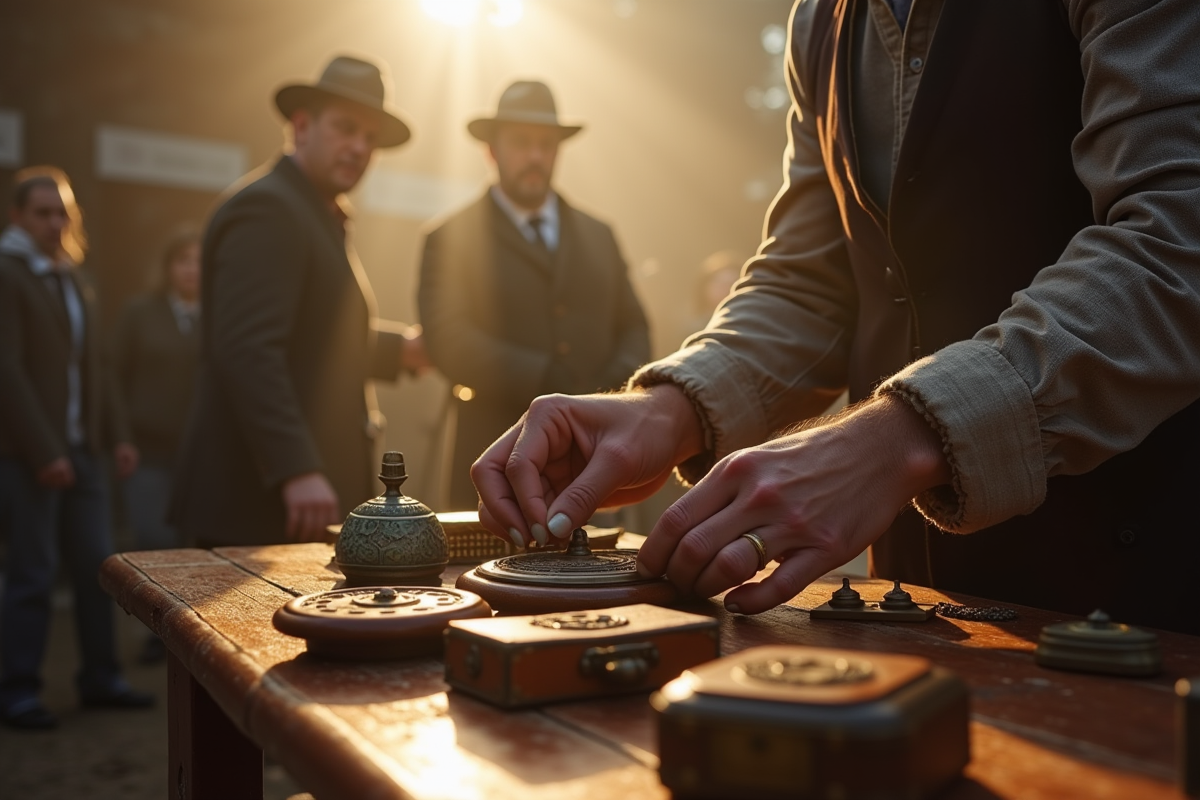
Special effects, sound effects, costumes… how these secret professions bring life to the screen
In the semi-darkness of an editing room, the foley artist redefines the film’s sound reality. A clash of gloves against a table becomes the dull sound of a blow, a few steps on gravel evoke a character’s walk in the dust. Shot after shot, he creates a palpable atmosphere, sometimes unsettling. The special effects transform the mundane into the spectacular: a simple hallway morphs into a crash scene or a raging storm. Thanks to these artifices, cinema pushes its limits, offers unprecedented sensations, evokes thrills, astonishment, and wonder.
As for the costume, it goes beyond mere dressing. It expresses a character, transcends eras, highlights the film’s genre. Behind each outfit, there is a team that researches archives, assembles fabrics and accessories to restore the plausibility of an era or the eccentricity of a universe. Nothing is left to chance: the choice of button, the cut of a jacket, every detail is part of the continuity of the narrative.
To grasp the diversity of behind-the-scenes roles, here are some revealing examples:
- Makeup transforms appearance, erases fatigue, ages or rejuvenates, leaves the mark of a shock or an emotion invisible to the naked eye.
- The chief electrician shapes the light, modulates contrasts, creates the tension of a scene or the softness of a morning.
- The prop master finds the right object, the one that lends credibility to the action: an abandoned suitcase, a forgotten pen, every element counts.
With each viewing, keep in mind that behind the obviousness of the spectacle, dozens of professions populate the shadows. They sculpt the image, make the sound resonate, dress each shot. Without them, cinema would be just an empty screen.